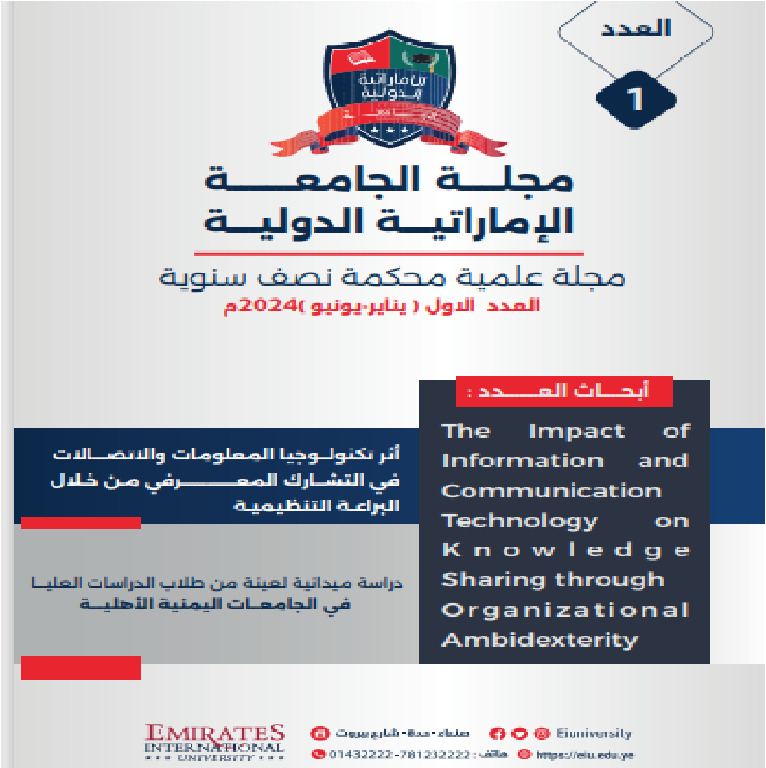
The Impact of Information and Communication Technology on Knowledge Sharing through Organizational Ambidexterity
A field study of a sample of graduate students In Yemeni private universities
DOI:
https://doi.org/10.64059/eiu.v1i1.4Keywords:
Information and Communication Technology, Knowledge sharing, – Organizational Ambidexterity, Yemen's privates UniversitiesAbstract
The study aimed to identify the impact of Information and Communication Technology (ICT) on Knowledge Sharing through Organizational Ambidexterity among postgraduate students in private universities. The study also aimed to examine the levels of ICT, Knowledge Sharing, and Organizational Ambidexterity practices within the surveyed universities. A stratified random sampling method was used to select a sample of (70) individuals. The descriptive-analytical method was applied, and data were collected using a questionnaire as the primary tool. Data were processed and analyzed using the Statistical Package for the Social Sciences (SPSS), alongside several statistical methods to measure the study's objectives and test its hypotheses.
The results revealed that private universities show significant interest in the impact of ICT on Knowledge Sharing through Organizational Ambidexterity. The study recommends that private universities should continue their ICT and Organizational Ambidexterity practices, and enhance them by providing all possible means to discover and invest in the elements of university success.
References
الجبوري، مراد موسى عبد. (2021). دور استراتيجية تكنولوجيا المعلومات في بناء البراعة التنظيمية: دراسة استطلاعية لآراء عينة من العاملين في شركة كرونجي للمشروبات الغازية. مجلة جامعة الأنبار للعلوم الاقتصادية والإدارية.
الخليدي، عبد السلام. (2014). البحث العلمي في اليمن (الواقع والطموح). كلية الهندسة، جامعة صنعاء.
السالم، علاء الدين. (2010). نظم إدارة المعلومات. المنظمة العربية للتنمية الإدارية.
السيد، عبد القادر محمد. (2018). البحث العلمي في الوطن العربي: الواقع ومقترحات التطوير. المجلة الدولية للبحوث في العلوم التربوية، 1(2).
الطائي، محمد عبد حسين. (2006). المدخل إلى نظم المعلومات الإدارية وتكنولوجيا المعلومات. دار وائل للنشر والتوزيع.
العبيدي، رأفت عاصي. (2020). دور القدرات التكنولوجية في تعزيز أبعاد البراعة التنظيمية: دراسة استطلاعية لآراء عينة من العاملين في المديرية العامة للتربية في محافظة نينوى. المجلة العربية للإدارة، 40(3)، 145–161.
عكار، حسين عبد الله، والعامري، عبد العزيز عبد الهادي. (2022). متطلبات تطوير البحث العلمي في الجامعات اليمنية من وجهة نظر الخبراء. مجلة العلوم التربوية والنفسية، 6(21)، 1–22.
العنزي، سعد، والساعدي، مؤيد. (2008). المرتكزات الفكرية المعاصرة لاستراتيجية إدارة الموارد البشرية في إطار المدخل المعرفي. مجلة القادسية للعلوم الإدارية والاقتصادية، 10(1).
الهاشمي، شيماء محمد صالح. (2003). دور ثقافة المعلومات في إعادة هندسة العمليات الإدارية [رسالة ماجستير غير منشورة]. جامعة الموصل.
برهان، محمد نور. (1999). تقنية المعلومات وتحديات الإدارة العامة العربية في عقد التسعينات. المجلة العربية للإدارة، 13(3).
ثابت، عبد الرحمن. (2005). نظم المعلومات الإدارية في المنظمات المعاصرة. الدار الجامعية.
جحيق، عبد المالك، وعبيدات، سارة. (2014). أثر التشارك المعرفي في تطوير الكفاءات الجماعية: دراسة ميدانية في شركة ميديتيرام بالجزائر العاصمة. مجلة أداء المؤسسات الجزائرية، (6).
جريو، داخل حسن. (2002). تكنولوجيا المعلومات: الأساليب وآفاق التطور. في وقائع مؤتمر المعلوماتية. كلية المنصور الجامعة.
حسام، أحمد، والياسري، وئام. (2017). تأثير أبعاد التشارك المعرفي في تحقيق الإبداع التنظيمي. مجلة الإدارة والاقتصاد، 40(13).
الزطمة، نضال. (2011). إدارة المعرفة وأثرها على تميز الأداء: دراسة تطبيقية على الكليات والمعاهد التقنية بقطاع غزة [رسالة ماجستير غير منشورة]. الجامعة الإسلامية - غزة.
العسكري، هناء. (2013). دور الثقافة التنظيمية في تعزيز التشارك المعرفي لدى أعضاء الهيئة التدريسية. مجلة المثنى للعلوم الإدارية والاقتصادية، 3(6).
القريشي، خيرية عبد كاظم. (2008). التقييم المالي لرأس المال البشري وأثره في ربحية المنشأة [رسالة ماجستير غير منشورة]. الجامعة المستنصرية.
الكميم، محمد. (2022). أثر التشارك المعرفي في كفاءة الأداء الأكاديمي: دراسة حالة جامعة إقليم سبأ. المجلة العلمية لجامعة إقليم سبأ، 4(2).
الملا، عبد الرحمن. (2015). متطلبات المشاركة المعرفية لتعزيز رقابة جودة التدقيق في ديوان الرقابة المالية الاتحادي. مجلة العلوم الاقتصادية والإدارية، 21(86).
بويدية، نعيمة، ودحماني، نسرين. (2019). أثر استخدام تكنولوجيا المعلومات والاتصال على التشارك المعرفي: دراسة حالة المؤسسة العمومية الاستشفائية ترشين إبراهيم - غرداية [رسالة ماجستير غير منشورة]. جامعة قاصدي مرباح ورقلة.
حطب، عايدة، والحجار، رائد. (2021). البراعة التنظيمية كمتغير وسيط بين الإدارة الإلكترونية والرشاقة التنظيمية في المدارس الثانوية بالمحافظات الجنوبية لفلسطين [رسالة ماجستير غير منشورة]. جامعة الأقصى.
سعيد، عباس. (2015). تأثير نظرية السلوك المخطط في الأداء التنظيمي عبر مشاركة المعرفة. مجلة جامعة الأنبار للعلوم الاقتصادية والإدارية، 7(13).
صالح، ماجد محمد. (2011). مكونات تقنية المعلومات والاتصالات وانعكاسها في جودة التعليم باعتماد متطلبات إدارة الجودة الشاملة. وقائع المؤتمر العلمي السنوي لكلية الإدارة والاقتصاد. جامعة الموصل.
عمارة، سلمى. (2018). أثر تكنولوجيا المعلومات والاتصال على تحسين إدارة الوقت في المؤسسة. مجلة الدراسات المالية والمحاسبية والإدارية، (10)، 3–30.
قنديلجي، عامر إبراهيم. (2002). نظم المعلومات الإدارية وتكنولوجيا المعلومات. دار المسيرة للنشر والتوزيع.
مساهل، ساسية. (2016). تأثير تكنولوجيا المعلومات على وظيفة المراجعة الداخلية في المؤسسة. كلية العلوم الاقتصادية والتجارية وعلوم التسيير، جامعة محمد خيضر بسكرة، 41–42.
ناصر، خلف، وعلي، جهاد. (2017). إسهام التشارك المعرفي في تشجيع الطلب على وثائق تأمين على الحياة. مجلة تكريت للعلوم الإدارية والاقتصادية، 3(39).
نجادات، عبد السلام. (2012). واقع نقل المعرفة والتشارك بها في ظل العولمة. المؤتمر العالمي الدولي. جامعة الجنان.
Akgün, Ö. E., & Güntaş, S. (2018). Lisansüstü öğrencilerinin bilimsel araştırma yeterliliklerinin danışman görüşlerine dayalı olarak incelenmesi: Kuzey Kıbrıs Türk Cumhuriyeti örneği. Sakarya University Journal of Education, 8(2), 131–144.
Alavi, M., & Leidner, D. E. (2001). Knowledge management and knowledge management systems: Conceptual foundations and research issues. MIS Quarterly, 25(1), 107–136.
Altıok, S., Yükseltürk, E., & Üçgül, M. (2018). Lisansüstü öğrencilerinin bilimsel araştırmaya ilişkin yeterlikleri ve araştırmaya yönelik kaygılarının çeşitli değişkenler açısından incelenmesi. Yükseköğretim ve Bilim Dergisi, 8(2), 348–367.
Baron, R. M., & Kenny, D. A. (1986). The moderator-mediator variable distinction in social psychological research: Conceptual, strategic, and statistical considerations. Journal of Personality and Social Psychology, 51(6), 1173–1182.
Bodwell, W., & Chermack, T. J. (2010). Organizational ambidexterity: Integrating deliberate and emergent strategy with scenario planning. Technological Forecasting and Social Change, 77(2), 193–202.
Cecchini, S., & Scott, C. (2003). Can information and communications technology applications contribute to poverty reduction? Lessons from rural India. Information Technology for Development, 10(2), 73–84.
Cegarra-Navarro, J. G., & Dewhurst, F. (2007). Linking organizational learning and customer capital through an ambidexterity context: An empirical investigation in SMEs. The International Journal of Human Resource Management, 18(10), 1720–1735.
Daft, R. L. (2003). Industrial management (6th ed.). Thomson/South-Western.
Gibson, B., & Birkinshaw, J. (2004). "The Antecedents, Consequences, and Mediating Role of Organization Ambidexterity." Academy of Management Journal, 226-209, (2)47.
Jeon, S., & Gulikm, Y. (2011). An integrative model for knowledge sharing in communities of practice. Journal of Knowledge Management, Issue: 3270-1367.
Jansen, J., George, G., Bosch, F., & Volberda, H. (2008). Senior Attributes and Organizational Ambidexterity: The Moderating role of Transformational Leadership. Journal of Management Studies, (5)45, P1007-982.
James, Senn. (1998). Information Technology in Business: Principles, Practice and Opportunities. 2th, Prentice Hall, New Jersey, p:22.
Kotler, P. (2006). Marketing Management, 12th ed., Pearson Education.
Kragwski & Ritzmanlary. (2005). Operations Management Process & Value Chains, 7th ed., Prentice Hall, USA.
Mom, Tom JM., Frans AJ Van Den Bosch, and Henk W. Volberda. (2009). "Understanding variation in managers’ ambidexterity: Investigating direct and interaction effects of formal structural and personal coordination mechanisms." Organization Science 20(4), pp. 828-812, pp. 444-437.
Pai, A. (2007). “Overcoming the Innovator’s Dilemma through Organizational Ambidexterity within the Indian Pharmaceutical Industry.” Master’s Dissertation, University of Nottingham.
Raziq, M., Satos, L., & Borini, F. (2022). The differentiated role of Organizational Ambidexterity and Organizational Innovation in the subsidiary reverse Knowledge transfer process. Journal of Knowledge Management, (1)26.
SAĞDIÇ, A., Çelik, H., & Karamustafaoğlu, O. (2017). Akademik danışmanlık ve nitel araştırma eğitimi programının genç araştırmacıların proje önerisi hazırlama becerisine etkisi. Alan Eğitimi Araştırmaları Dergisi, 11-1, (1)3.
Shore, B. (1996). Using information Technology to achieve a competitive advantage: a study of current & future trends. Journal of Computer Information System, Summer.
Luu, T. (2016). Organizational Ambidexterity and Supply Chain Agility: The mediating role of external Knowledge Sharing and moderating role of Competitive intelligence. International Journal of Logistics Research and Applications, 603-583, (6)19.
Yigit, M. (2013). Organizational Ambidexterity: Balancing Exploitation and Exploration in Organizations. Master dissertation, Blekinge Institute of Technology School of Management, (5)45, P1007-982.
Yigit, M. (2013). "Organizational Ambidexterity: Balancing Exploitation and Exploration in Organization". Unpublished master dissertation, Blekinge Institute of Technology School of Management.
Downloads
Published
Issue
Section
Categories
License
Copyright (c) 2024 the Author(s).

This work is licensed under a Creative Commons Attribution 4.0 International License.